What Causes Chimney Leaks After Heavy Rain?
Heavy rain exposes weak points in the chimney system. Flashing, crowns, caps, and masonry are the most common sources of leaks after a storm.




Based on 500+ Reviews

Proudly American
Owned & Operated

A chimney leak after heavy rain is a common problem that many homeowners experience. While a chimney is designed to protect the fireplace and home from outdoor moisture, heavy rainfall can expose weak points in the chimney system and allow water to enter.
Water leaks often occur because of damaged chimney components such as flashing, chimney caps, crowns, or masonry. In some cases, the problem may have existed for months but only becomes noticeable after a major storm when a large amount of water tests the chimney's protective barriers. Identifying the cause of a chimney leak after heavy rain is important because continued moisture exposure can damage the chimney structure, roof, fireplace, and interior areas of the home.
Heavy rain puts additional stress on all chimney moisture protection systems.
During normal weather, small defects may not allow much water to enter. However, intense rainfall can force water through:
Common causes of chimney leaks after heavy rain include:
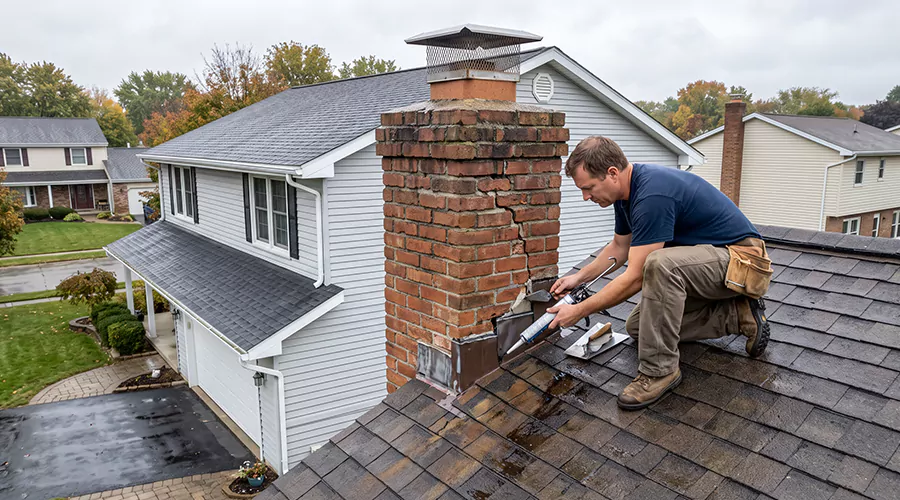
One of the most common causes of chimney leaks after heavy rain is damaged flashing. Flashing is the waterproof barrier installed where the chimney meets the roof. Its job is to prevent rainwater from entering the gap between the chimney and roofing materials. Proper chimney installation ensures flashing is correctly placed from the start.
Heavy rain can reveal flashing problems that were not noticeable before.
Common flashing issues include:
Signs of flashing failure include:
Repairing damaged flashing is often necessary to stop recurring chimney leaks.
The chimney crown is located at the top of a masonry chimney and helps direct water away from the structure. When heavy rain occurs, cracks in the crown can allow water to enter directly into the chimney.
Common causes of crown damage include:
Signs of a cracked chimney crown include:
A damaged crown should be repaired because water entering from the top can travel through the entire chimney structure.
The chimney cap protects the chimney opening from rain, debris, and animals. If the cap is damaged, heavy rain can enter directly into the chimney.
Common chimney cap problems include:
A damaged chimney cap may allow:
Replacing a damaged chimney cap can help prevent water from entering through the top of the chimney.
Masonry chimneys are constantly exposed to changing weather conditions. Over time, bricks and mortar can develop cracks that allow water to enter.
Heavy rain can force moisture through:
Once water enters brickwork, it can cause:
Small cracks should be repaired before they allow more moisture into the chimney structure. In severe cases, fireplace restoration may be needed to rebuild damaged sections.
Brick and mortar are porous materials, meaning they can absorb water. Without proper waterproofing protection, heavy rain can cause excessive moisture absorption.
Signs of poor waterproofing include:
A chimney waterproofing treatment can help reduce water absorption while allowing trapped moisture vapor to escape. However, waterproofing does not fix existing cracks or damaged components.
Sometimes the chimney itself is not the only problem. Poor roof drainage can increase the amount of water reaching the chimney area.
Common drainage problems include:
When large amounts of water collect around the chimney, even small defects can become leak points. Maintaining gutters and roof drainage helps reduce water exposure.
The chimney liner protects the chimney structure from heat, gases, and moisture. A damaged liner may allow moisture to affect areas inside the chimney.
Possible causes include:
Signs of liner problems may include:
A chimney inspection may be required to determine whether liner damage is contributing to moisture problems.
Not every chimney leak after rain is caused by water entering from outside. Condensation can also create moisture inside the chimney. Condensation occurs when warm fireplace gases meet cooler chimney surfaces.
Possible causes include:
Signs of condensation include:
An inspection can help determine whether moisture is coming from rain or internal condensation.
Common signs of chimney water leaks include:
| Sign | Possible Cause |
|---|---|
| Water inside fireplace | Cap, crown, or flashing problems |
| Ceiling stains | Flashing failure |
| Musty odors | Moisture buildup |
| White stains on bricks | Water movement through masonry |
| Crumbling mortar | Masonry damage |
| Rusted fireplace parts | Water exposure |
| Damp walls | Interior water intrusion |
These signs should be investigated before the damage becomes worse.
If chimney leaks continue after heavy rain, moisture can cause:
Water damage often spreads slowly, making early detection important.
Finding the source of a leak can be difficult because water can travel through hidden areas.
Important areas to inspect include:
| Area | Possible Issue |
|---|---|
| Chimney top | Cap or crown damage |
| Roof connection | Flashing failure |
| Exterior masonry | Cracks and deterioration |
| Fireplace area | Interior moisture |
| Chimney interior | Liner or condensation problems |
A professional chimney inspection can help identify the exact entry point.
The repair depends on the cause of the leak.
Possible solutions include:
| Problem | Repair Solution |
|---|---|
| Damaged cap | Cap repair or replacement |
| Cracked crown | Crown repair |
| Failed flashing | Flashing repair or replacement |
| Cracked masonry | Brick and mortar repair |
| Water absorption | Waterproofing |
| Damaged liner | Liner repair or replacement |
Repairing the actual source of water entry is more effective than applying temporary sealants.
Preventive maintenance can reduce the risk of leaks.
Helpful steps include:
Regular maintenance helps protect the chimney from severe weather conditions.
Chimney leaks after heavy rain are usually caused by damaged moisture protection components such as flashing, chimney crowns, caps, masonry, or waterproofing systems. Heavy rainfall often reveals problems that were already developing but had not yet become noticeable. Addressing small cracks, damaged components, and moisture issues early can help prevent larger repairs. Regular chimney inspections and proper maintenance help protect the chimney structure, prevent water damage, and keep the fireplace system functioning properly.
Heavy rain puts more pressure on chimney protection systems and can expose small cracks, flashing problems, or weak areas.
Yes. A properly installed chimney cap helps prevent rain from entering through the chimney opening.
Possible causes include a damaged chimney cap, cracked crown, faulty flashing, or masonry problems.
Yes. Continued moisture can damage bricks, mortar, roofing materials, and interior areas of the home.
A chimney inspection can help identify whether the problem is caused by the cap, crown, flashing, masonry, or another component.
Yes. Early repairs help prevent moisture from causing more extensive and expensive damage.
Heavy rain exposes weak points in the chimney system. Flashing, crowns, caps, and masonry are the most common sources of leaks after a storm.
